Study on energy management systems: Great potential
 Energie Zukunft Schweiz
Photovoltaics on the roof, electric car in front of the house, battery and heat pump in the basement. But the appliances do not talk to each other - they are not operated in a coordinated manner. Unfortunately, this is still very often the case. Energy management systems (EMS) can provide a remedy. This is the subject of the InnoNet-Energy study conducted by the Swiss Federal Institute of Technology in Lausanne (EPFL) with the support of the Swiss Federal Office of Energy (SFOE).
Energy management systems (EMS) are an important building block in the digitalization of the energy sector. They not only provide users with data in real time, but also play a central role in controlling the production and consumption of energy. In their survey, the authors of the study wanted to know who is already using these systems today, what the drivers and barriers are to purchasing them, how and with whom information is exchanged and what recommendations can be derived from the findings to accelerate the transformation.
The study shows that two thirds (65%) of the survey participants have installed several energy technologies at the same time - heat pumps, photovoltaic systems and electric vehicles. 16% of households control these different systems with an EMS. A third (35%) of respondents only have a photovoltaic system or an electric car.
Matthias Galus, Head of the Geoinformation and Digital Innovation Section at the Swiss Federal Office of Energy, and Maria Anna Hecher, researcher in the Laboratory for Human-Environment Relations in Urban Systems at EPFL, categorize the results of the study and point out possible measures to reduce barriers.
Energeiaplus: PV and heat pumps are already widespread. The situation is different with energy management systems. Does that surprise you?
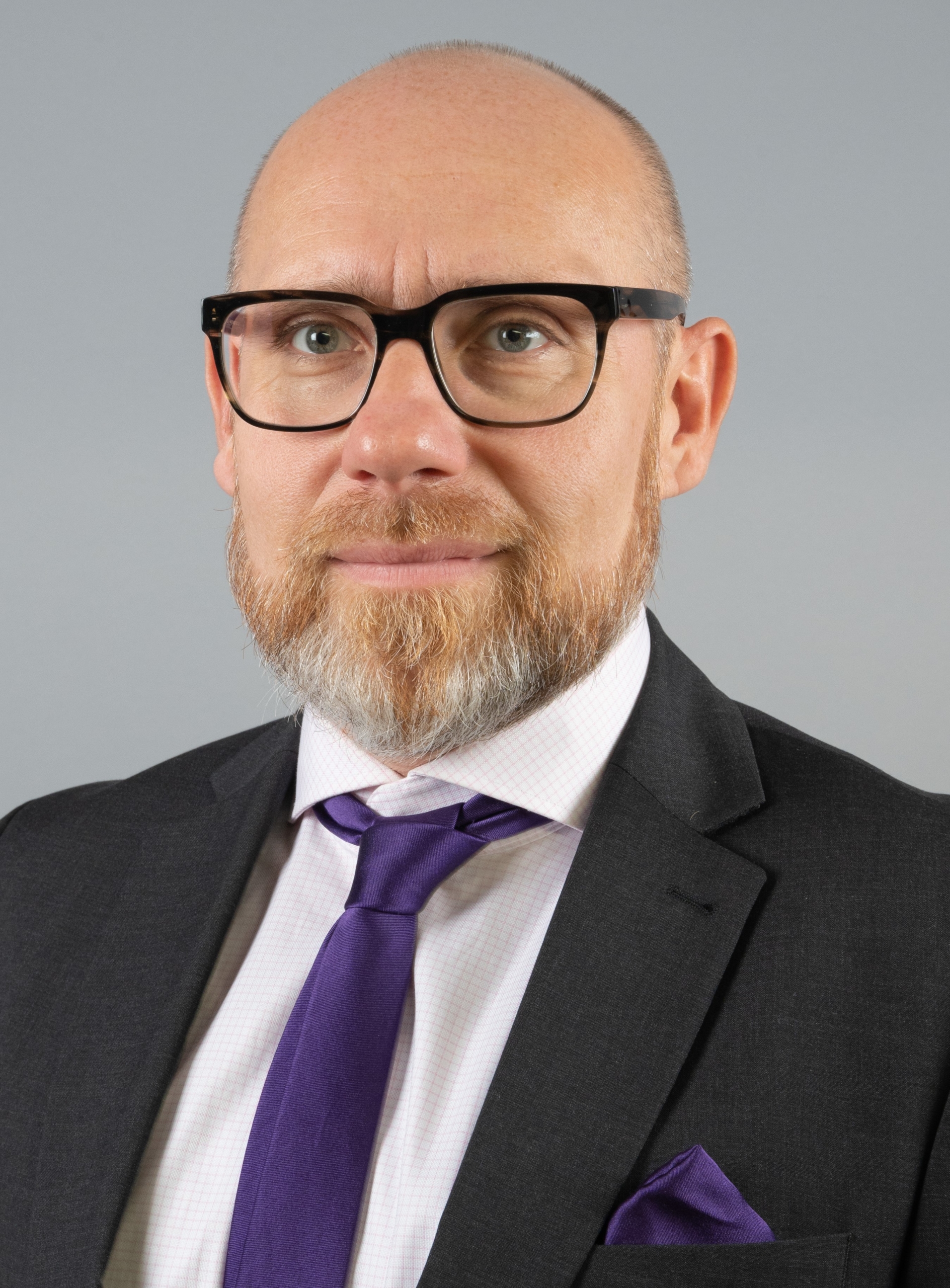
Matthias Galus heads the Geoinformation and Digital Innovation section at the SFOE. Image: SFOE
Matthias Galus: Unfortunately, this is not surprising. We are aware that building automation and EMS are not yet widespread. In conversations with single-family home owners, for example, we have noticed what this study has now scientifically proven for the first time. There has been untapped potential for some time. The study confirms discussions that we also held as part of the "Digitalization in buildings - interoperability and information security" 2022 project.
What reasons do you see for this?
Matthias Galus: We seem to have a toxic cocktail. Installers are working to capacity, their business is booming anyway. They shy away from additional complexity and concentrate on their core business, for example photovoltaic installers on photovoltaic system construction, heating installers on heat pumps, and so on. System integration remains secondary and is hardly ever actively offered or marketed by installers. On the other hand, there is still a lack of demand from property owners. Obtaining an overview of EMS solutions is not easy, and only a small proportion of customers are prepared to make the effort to then commission their service providers competently.
In addition, the financial benefits are still rather low or unclear. Savings are currently achieved primarily by optimizing self-consumption. The electricity industry does not currently offer dynamic electricity tariffs or the use of flexibility, which enable EMS. The closed market and the still poorly digitized distribution grids stand in the way of this.
As EMS are not a primary measure of the model regulations of the cantons in the energy sector (MuKEn), there are also no specifications and no financial subsidies are available. The EPFL study identifies complexity on the provider and user side as the most important barriers to the spread of EMS, together with profitability, which is considered to be rather low.
Who is already using these systems? Is there a pattern?

Maria Anna Heche conducts research in the Laboratory for Human-Environment Relations in Urban Systems at EPFL Image: © Miriam Raneburger
Maria Anna Hecher: Yes, these are usually single-family homeowners who live in a partnership with children and have a higher level of education and household income. People who use EMS have a positive attitude towards renewable energies, strive for energy independence and want to optimize their own consumption. Users feel able to deal with EMS and state that they have sufficient information about it. Nevertheless, the financial attractiveness of EMS is perceived as rather low.
Energy management systems can play a central role in the future of energy. They can reduce the load on electricity grids by regulating the operation of unnecessary appliances. Nevertheless, users are still cautious. Is there a lack of information - including on profitability?
Matthias Galus: Yes, there is certainly a lack of information on the part of users and consumers, which means that many opportunities for transformation remain untapped. An opportunity always arises when photovoltaic systems or heat pumps are newly installed or when buildings are renovated, whenever consumers are concerned with the topic of optimization. At the same time, it is important to provide information about the opportunities offered by EMS, explain the economic viability and provide information about the benefits.
It is also important to reduce the complexity for users, for example by providing guidelines on interoperability or what system integration could look like. Bringing potential users together with experienced EMS users can greatly support the adoption of EMS by making positive experiences accessible. This can also be done digitally, for example via apps. Important: The information must be low-threshold, simple and provide the most concrete approaches possible for interested parties. This can break down barriers.
What role do the providers of such energy technologies or energy supply companies or electricity grid operators play? The latter in particular are likely to be interested in ensuring that the electricity grid is not overloaded.
Matthias Galus: The providers of energy technologies are the first point of contact for users. Local proximity and trust play an important role here. This is where network effects come into play. Local providers are particularly in demand when it comes to interoperability and system integration. This needs to be made easier and interested parties should have as little effort and cost as possible. The greater the complexity of networking, the less consumers will get involved. After all, their lives should become simpler and more convenient - keyword "plug & play". We are still a long way from that.
Electricity grid operators certainly have an interest in this. But flexibility is not yet included in grid planning and operation - although this has been discussed for years. Electricity grid operators will certainly not be the driving force behind the spread of EMS in the foreseeable future, but they could provide incentives via dynamic tariffs, as this would create a tangible economic incentive to optimize energy use. The Federal Act for a Secure Electricity Supply provides regulatory guidelines for the first time, as the industry has not taken action itself in recent years.
The Power Days are taking place again this year. It is a trade fair at which the electricity sector presents itself. Are such events also suitable as a catalyst?
Matthias Galus: The study shows that events like the Powertage primarily bring together the various players on the supply side. It is an important event for sensitizing providers to the barriers that need to be overcome in the adoption process. Providers can network here and jointly identify approaches to reduce the complexity for users. With such approaches and corresponding, concrete measures, it is then important to pick up interested parties in direct exchanges, but also via digital channels that are activated at the right time.
The technical aspects of these energy technologies are not the focus of the study; the focus is on users. Why this focus? What was the motivation behind it?
Maria Anna Hecher: Our study investigates the extent to which EMS is widespread, which players play a key role and what the barriers are that affect potential users. In addition to the technical aspects, the behavioral and socio-psychological aspects also play a role here. It is not only technical innovations that are needed, but also acceptance and the will to implement on the part of the users. This study is the first to examine these aspects and also shows how strong spatial and social network effects can be.
To conclude very specifically: in your opinion, what 3 measures should be taken to ensure that the potential of EMS is utilized?
Maria Anna Hecher: There are only a few moments in a building's life cycle when things are tackled - for example when a building is renovated or a photovoltaic system is installed. These must be exploited. Energy technology providers, installers and architects play a key role in offering technology bundles or systems that can be easily expanded at a later date. They are an important driver for the integration of systems. Stakeholders (energy technology providers, installers and architects) must be made aware of their ability to influence system integration at local level. EMS providers should be networked with installers and architects via associations and events so that awareness of the use of EMS and the reduction of technical barriers can take place and system integration is ultimately also implemented
Matthias Galus: First of all, I would like to see the development of a digital analysis tool that supports users in evaluating the cost-effectiveness of EMS. This could be linked to the existing applications sonnendach.ch and Heizkostenrechner.ch. The next step is to create a basis that helps users to reduce or manage the complexity of EMS, for example with simple step-by-step guides. This increases demand competence. In addition, an attempt could be made to bring interested parties together with users from their immediate environment in order to strengthen network effects.
Here you can find the InnoNet-Energy brochure in German, English and French.
Text and interview: Brigitte Mader, Communications, Swiss Federal Office of Energy SFOE
Graphic: Energy Future Switzerland
 Noch keine Bewertungen
 Loading...


Neuste Kommentare